

What This Means
Design Ops isn't about making designers more efficient. It's about removing the operational friction that prevents them from doing high-value work. I build process frameworks that reduce costs, streamline workflows, and ensure your design function scales without burning out talent.
How I Approach It
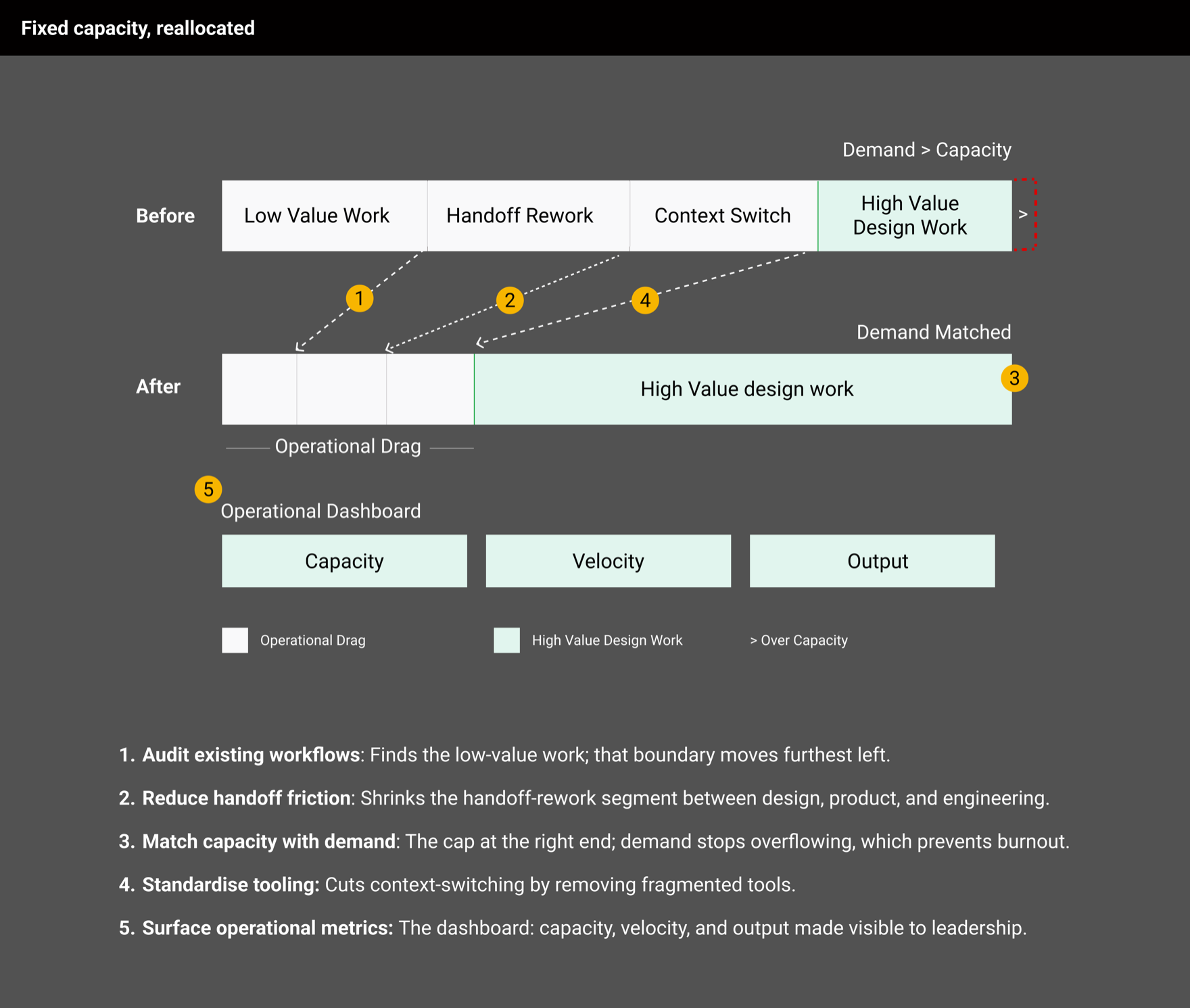
Audit existing workflows
Audit existing workflows to identify bottlenecks, redundancies, and low-value activities
Reduce handoff friction
Design process frameworks that reduce handoff friction between design, product, and engineering
Match capacity with demand
Implement resource allocation models that match capacity with demand, preventing overcommitment
Standardise tooling
Establish tooling standards and workflows that reduce context-switching and improve collaboration
Surface operational metrics
Build operational dashboards that surface capacity, velocity, and output metrics for leadership visibility
When You Need This
- Your design team is constantly overcommitted but output doesn't match effort
- Designers spend more time on process overhead than actual design work
- You're scaling the team but efficiency is declining, not improving
- Cross-functional handoffs are slow, unclear, or require constant rework
- Leadership lacks visibility into design capacity, timelines, or output quality
Challenges Expected
- Resistance from teams comfortable with existing workflows, even when those workflows are demonstrably inefficient
- Misalignment between design, product, and engineering on what "done" means at each handoff point
- Tooling fragmentation where teams have adopted different tools organically, creating integration gaps
- Lack of baseline metrics, making it difficult to measure improvement without first establishing what "current state" actually looks like
- Stakeholder expectations that operational change delivers immediate results, when sustainable process improvement requires iterative adoption
- Balancing standardisation with the flexibility designers need to do creative work without feeling constrained by process
Expected Outcomes
- Streamlined workflows that reduce time spent on low-value activities
- Clear resource allocation models that prevent overcommitment and burnout
- Improved cross-functional collaboration through standardised processes and handoffs
- Operational visibility into design capacity, velocity, and quality metrics
- A scalable design function that maintains quality as the team grows
What I Bring To This
At Johnson Controls, I restructured design operations for a 39-person global team delivering the OpenBlue platform. I developed strategic alignment processes that cut operational costs by 28%, improved handover quality between design and engineering, and eliminated 40% of non-valuable work through research-led prioritisation. The team went from being a service function to a recognised strategic partner embedded in product roadmap planning.
At SwissRe, I restructured workflows across a 14-member EMEA design team, embedding UX strategy directly into business objective planning. I drove adoption of systematic usability testing protocols that decreased user-reported bugs by 50% and support tickets by 30%, while implementing structured review gates that caught defects before they reached production.
I founded DesignOps Aligned to bring this operational discipline to organisations that need it. I also hold PRINCE2 Agile and PMI-ACP certifications, grounding design operations work in formal programme management methodology rather than ad hoc process improvement.